
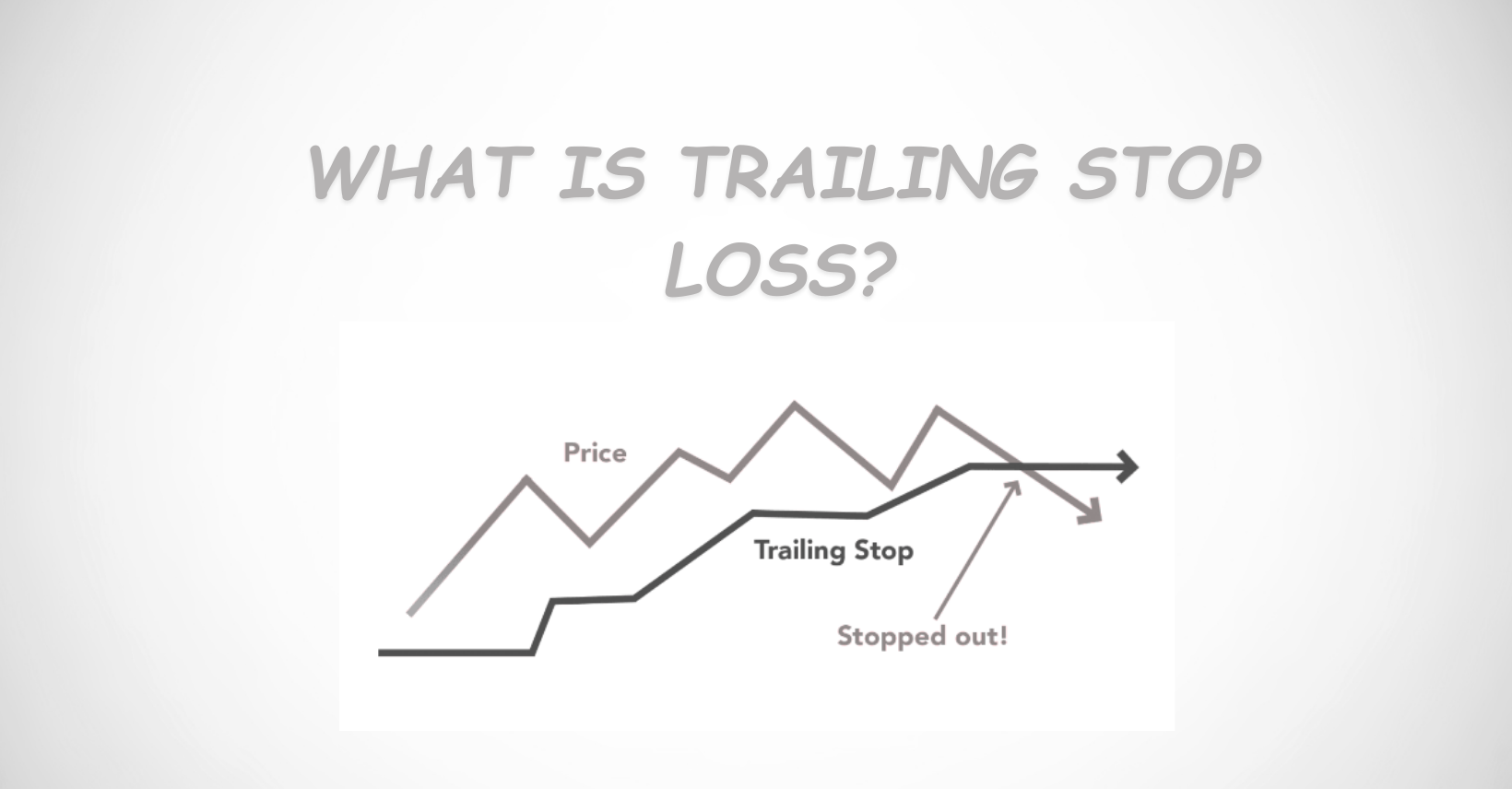
A trailing stop loss is a dynamic risk management order that automatically adjusts its stop level as price moves in the trader’s favor.
Unlike a fixed stop loss that stays at one constant level, a trailing stop loss follows price at a predefined distance, locking in profits while still giving the trade room to continue moving.
Trailing stop loss is widely used in forex, stocks, futures, commodities, and cryptocurrency trading because it offers a structured way to protect open gains without constant manual adjustment.
It reduces emotional decision-making by automating exit logic based purely on price movement instead of fear or greed.
This guide presents a complete definition of trailing stop loss, explains how it functions in live market conditions, outlines its variations, details how it is calculated, and clarifies why trailing stop loss remains one of the most practical tools in professional trade management.
Definition of Trailing Stop Loss
Trailing stop loss is a type of stop order that automatically moves in the direction of profit as price advances.
It is a protective mechanism that maintains a fixed distance from the current market price, measured in pips, points, percentages, or volatility-based values.
A trailing stop loss never moves backward when price retraces.
Once it adjusts upward in a buy trade or downward in a sell trade, it remains at the most favorable level reached.
If the market reverses and touches the trailing stop level, the position closes automatically.
The core purpose of a trailing stop loss is simple: protect accumulated profit while allowing the trade to stay open as long as the trend continues.
Meaning of Trailing Stop Loss in Trading
In trading, trailing stop loss means the stop level is dynamic rather than static.
Instead of placing one fixed exit point and leaving it unchanged, the stop updates automatically as the trade becomes profitable.
This makes trailing stop loss different from a traditional stop loss because it performs two functions simultaneously:
It limits downside exposure.
It secures unrealized gains as price moves in the intended direction.
Trailing stop loss acts as a mechanical exit system designed to capture extended trend movement while reducing the impact of sudden reversals.
Mechanics of How Trailing Stop Loss Works
Trailing stop loss operates by placing a stop order at a specific distance from the current market price.
When price moves favorably, the stop shifts forward.
When price moves against the position, the stop remains fixed at its last adjusted level.
The operating principle follows three rules:
If price moves further into profit, the stop advances.
If price moves against the trade, the stop does not retreat.
If price touches the trailing stop level, the trade closes automatically.
The predefined trailing distance determines how closely the stop tracks price movement.
Trailing Stop Loss Compared to Regular Stop Loss
Both trailing stop loss and regular stop loss exist for risk protection, but their behavior differs significantly.
Regular Stop Loss
A regular stop loss is a fixed exit placed at a specific price level.
Once set, it remains unchanged unless manually adjusted.
Its primary function is to define the maximum acceptable loss on a trade.
Trailing Stop Loss
A trailing stop loss is a moving stop that adjusts automatically as price moves into profit.
It serves both as a loss limiter and a profit protection tool.
Traders often apply trailing stop loss after a position has already gained momentum and they want to hold the trade longer without exposing profits to full reversal risk.
| Order Type | Stop Behavior | Primary Function | Best Use Case |
|---|---|---|---|
| Regular Stop Loss | fixed stop level | defines maximum acceptable loss | initial risk management control and invalidation |
| Trailing Stop Loss | stop level advances with profit | protects profit while allowing continuation | trend continuation and extended moves |
Importance of Trailing Stop Loss
Trailing stop loss addresses one of the most difficult aspects of trading: deciding when to exit a profitable position.
Many traders enter correctly but struggle with exits.
Some close trades too early and miss larger moves.
Others hold positions too long and watch profits disappear during reversals.
Trailing stop loss introduces a rule-based exit structure that protects gains while allowing room for continuation.
It also helps reduce emotional errors such as:
closing trades prematurely due to fear
widening stop losses impulsively
refusing to exit after trend structure shifts
allowing profitable trades to turn negative
By automating exit logic, trailing stop loss promotes consistency and trading discipline.
Calculation of Trailing Stop Loss
Trailing stop loss is calculated using a predefined trailing distance.
This distance can be defined in multiple formats depending on strategy and platform.
The calculation formula is:
For a buy trade:
Trailing Stop Price = Current Price − Trailing Distance
For a sell trade:
Trailing Stop Price = Current Price + Trailing Distance
As the market advances further into profit, the stop recalculates and shifts forward accordingly.
The stop never moves in the opposite direction.
It only adjusts when the trade becomes more profitable.
Example: Trailing Stop Loss in a Buy Trade
Consider a buy trade on EUR/USD entered at 1.1000 with a trailing stop of 20 pips.
If price rises to 1.1030, the trailing stop adjusts:
New trailing stop: 1.1010
If price continues to 1.1050:
New trailing stop: 1.1030
If price reverses to 1.1030, the stop is triggered and the trade closes, securing profit without manual intervention.
Example: Trailing Stop Loss in a Sell Trade
Assume a sell trade on XAUUSD at 2050 with a trailing stop of 300 points.
Entry price: 2050
Trailing distance: 300 points
Initial trailing stop: 2080
If price falls to 2030:
New trailing stop: 2060
If price declines further to 2010:
New trailing stop: 2040
If price rises back to 2040, the stop activates and the trade closes, protecting accumulated profit.
Limitations of Trailing Stop Loss
Trailing stop loss is not a guaranteed profit device.
It is a management tool that improves risk control but does not eliminate losses.
It does not:
prevent slippage during high volatility
guarantee exact execution price
protect against extreme gap risk during major news
replace proper analysis or strategic entry
If price never moves into profit, the trailing stop behaves like a normal stop loss and closes the trade at a loss.
Types of Trailing Stop Loss
Trailing stop loss can be structured in several formats depending on the strategy.
Fixed Pip or Point Trailing Stop
A fixed-distance trailing stop uses a constant value such as 10 pips or 200 points.
This method is straightforward but may not adapt to changing volatility.
Percentage-Based Trailing Stop
A percentage trailing stop maintains a fixed percentage distance from current price.
It is commonly used in stock investing and longer-term position management.
ATR-Based Trailing Stop
An ATR-based trailing stop calculates distance using Average True Range, reflecting market volatility.
When volatility increases, the stop widens.
When volatility decreases, it tightens.
This approach adapts to market conditions and is widely used in swing and trend trading.
Moving Average Trailing Stop
A moving average trailing stop uses a moving average line as the dynamic stop level.
In a buy trade, the position remains open while price stays above the average.
In a sell trade, it remains open while price stays below.
This method aligns exits with trend structure.
Advantages of Trailing Stop Loss
Trailing stop loss offers several practical benefits.
It automatically protects profit as price advances.
It reduces emotional decision-making during strong trends.
It allows large winning trades to develop fully.
It creates a consistent, rule-based exit process.
Disadvantages of Trailing Stop Loss
Trailing stop loss also has limitations.
If set too tight, it may close trades prematurely during normal pullbacks.
It performs poorly in ranging or sideways markets.
It can be triggered by spread widening in forex and CFD markets.
It may experience slippage during high-impact news events.
Appropriate Market Conditions for Trailing Stop Loss
Trailing stop loss performs best in trending environments where price moves steadily in one direction.
It is commonly applied in:
breakout trades
trend-following systems
multi-session swing trades
momentum continuation setups
It is less effective in choppy markets with frequent reversals.
Selecting the Proper Trailing Distance
The effectiveness of trailing stop loss depends heavily on distance selection.
Tight trailing stops secure profits quickly but increase premature exit risk.
Wide trailing stops provide breathing room but may allow larger profit pullbacks before closure.
Volatility-based distances often offer balance by aligning stop placement with actual market behavior.
Trailing Stop Loss Versus Take Profit
Take profit is a fixed target that closes a trade at a predetermined gain.
Trailing stop loss does not set a final objective.
Instead, it allows profit to expand as long as momentum continues.
Take profit offers certainty.
Trailing stop loss offers adaptability.
Some traders combine both methods by securing partial profit at a fixed target while trailing the remainder.
Application Across Different Markets
In forex trading, trailing stop loss is used during session momentum and breakout continuation.
In gold trading, wider trailing distances are often required due to volatility.
In cryptocurrency markets, trailing stops help protect large expansions while accounting for extreme swings.
In stock trading, trailing stops are frequently set as percentage values for long-term position management.
Common Usage Errors
Common mistakes include applying a trailing stop immediately after entry, setting the distance too tight, ignoring volatility differences between assets, and assuming trailing stop loss guarantees profit.
Trailing Stop Loss and Slippage
Trailing stop loss executes as a stop order, meaning execution price may differ from the stop level during rapid market movement.
Slippage is more likely during:
While trailing stop loss reduces exposure, it does not remove execution risk.
Trailing Stop Loss and Market Structure Alignment
Trailing stop loss functions best when aligned with market structure.
Traders often trail stops behind:
higher lows in uptrends
lower highs in downtrends
key support or resistance levels
liquidity reaction zones
breakout retest areas
Structure-based trailing aligns exits with actual price behavior rather than arbitrary numbers.
Strategic Use in Professional Trading
In professional trading, trailing stop loss is often integrated into layered trade management.
A common structure includes:
initial stop at technical invalidation
partial profit at a predefined level
remaining position managed using trailing logic
This approach balances early profit protection with exposure to extended moves.
Concluding Definition
Trailing stop loss is a dynamic stop order that automatically advances in the direction of profit while maintaining a predefined distance from current price.
It does not move backward when price retraces.
When the market reverses sufficiently to reach the stop level, the position closes automatically.
Used across forex, stocks, commodities, and cryptocurrency markets, trailing stop loss provides a structured exit method that reduces emotional interference and strengthens profit protection in trending conditions.
When applied with proper distance selection and market awareness, trailing stop loss remains one of the most effective tools for disciplined trade management and long-term risk control.