
If you are asking what swing trading is, you are trying to define a trading method that captures medium-term price movements in financial markets without holding positions for only a few minutes like scalpers or for many years like long-term investors.
This document presents a structured and comprehensive definition of swing trading, including its operational mechanics, foundational principles, strategic components, timeframes, risk parameters, market applicability, advantages, limitations, and trader suitability.
Swing Trading
Swing trading is a market trading strategy designed to capture short-to-medium term price movements, commonly referred to as swings, within financial markets. Positions are typically held from several days up to several weeks, depending on market conditions and trade structure.
Primary Definition of Swing Trading
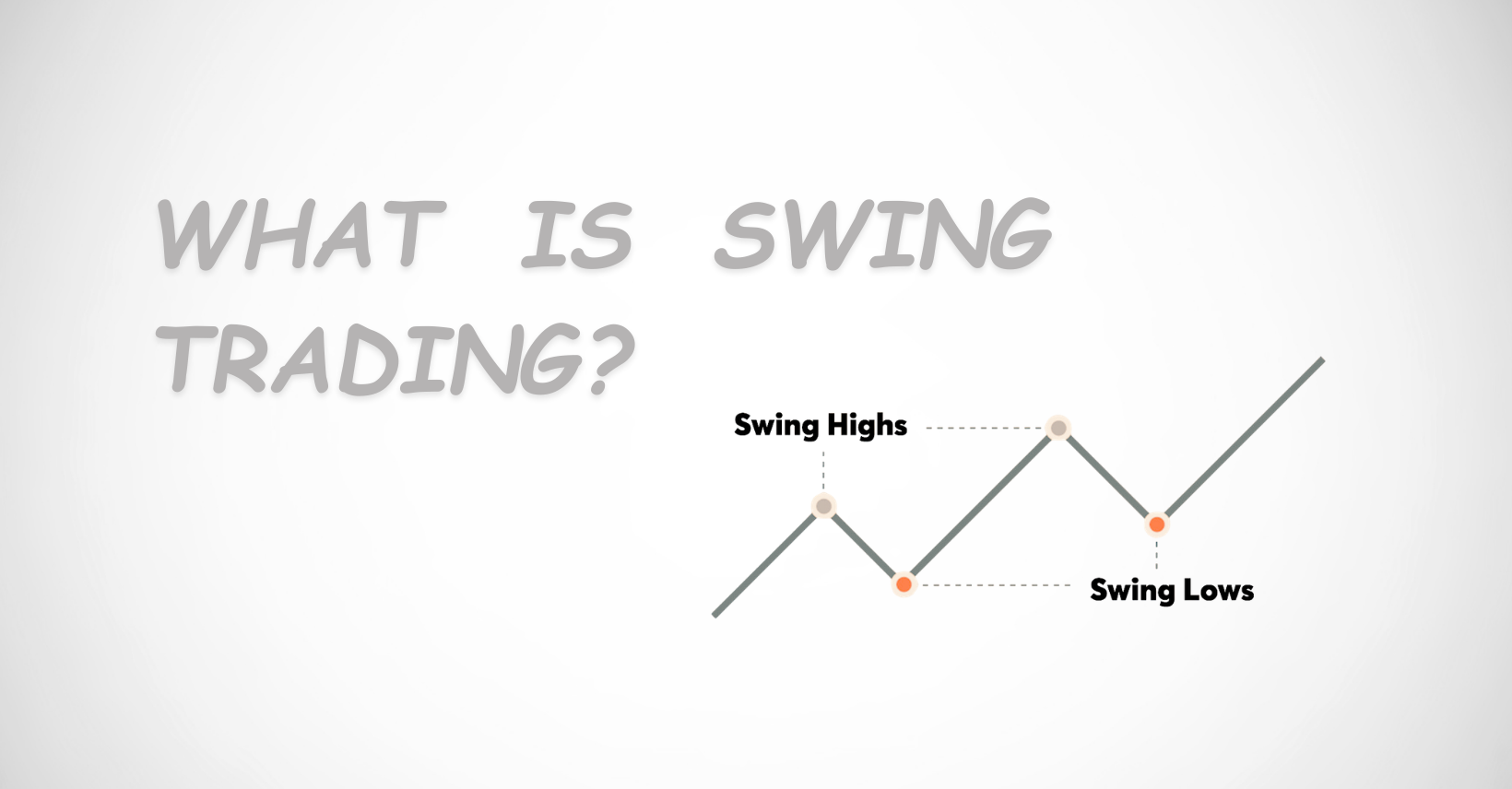
The foundational concept behind swing trading is based on cyclical price behavior:
Financial markets move in waves or directional swings.
A swing trader attempts to initiate a position near the early phase of a price swing and exit before that swing concludes.
In contrast to day trading, which requires all positions to be closed within the same trading session, swing trading permits overnight exposure. In contrast to long-term investing, positions are not maintained for extended multi-month or multi-year durations.
Simplified Operational Definition
In practical terms, swing trading means entering buy positions when price is expected to rise for several days and entering sell or short positions when price is expected to decline for several days.
The objective is not to catch exact tops or bottoms but to capture the central portion of a directional move where structure and probability align.
Swing trading focuses on measurable price expansion rather than minor intraday fluctuations.
Market Movement Structure in Swing Trading
A proper definition of swing trading requires an understanding of how markets structurally behave. Price action generally develops in three primary conditions:
Uptrend, characterized by higher highs and higher lows.
Downtrend, characterized by lower highs and lower lows.
Consolidation, characterized by sideways movement within a defined range.
Swing traders analyze these structural phases to identify:
Reversals occurring near established support or resistance zones.
Pullbacks forming within an existing trend.
Breakouts emerging from consolidation structures.
Trade entries are executed with predefined stop loss levels and projected targets, based on the expectation that price will continue moving in the identified direction over several trading sessions.
Timeframe Structure in Swing Trading
Swing trading is typically conducted on higher chart timeframes relative to scalping or day trading approaches.
Commonly referenced chart intervals include:
4-Hour timeframe (H4)
Daily timeframe (D1)
Weekly timeframe (W1) for broader directional context
A structured multi-timeframe model often includes:
Using the Daily chart to define the dominant trend.
Using the 4-Hour chart to refine entry structure.
Using the 1-Hour chart for additional confirmation signals.
This hierarchical approach enhances analytical precision while preserving a medium-term strategic outlook.
Core Principles of Swing Trading
Swing trading is built on structured principles that guide trade selection and risk control.
Trend Identification
Traders prioritize buying in confirmed uptrends and selling in confirmed downtrends. Aligning with prevailing direction increases statistical probability.
Support and Resistance
Support is an area where buying may increase, while resistance is where selling may increase. Swing traders typically buy at support in uptrends and sell at resistance in downtrends.
Risk Management Framework
Each trade includes a stop loss, take profit level, and calculated position size. Many disciplined traders risk only one to two percent of total capital per trade.
Risk-to-Reward Ratio Structure
Common risk-to-reward ratios include 1:2, 1:3, and 1:4, meaning one unit of risk is taken for two to four units of potential return. Over time, this structure supports consistent net profitability.
Market Applicability of Swing Trading
Swing trading can be applied across multiple financial instruments, provided sufficient liquidity and volatility exist.
Applicable markets include:
Foreign exchange currency pairs.
Equity markets and individual stocks.
Commodities such as gold and crude oil.
Market indices.
Cryptocurrency assets.
The essential requirement is consistent price movement and adequate trading volume.
Structural Advantages of Swing Trading
The definition of swing trading includes its structural benefits.
Reduced Monitoring Requirements
Swing trading does not require continuous chart observation. Trade decisions are typically made following candle closures, reducing intraday monitoring demands.
Expanded Price Targets
Compared to short-term scalping strategies, swing trading pursues larger price movements, often producing more favorable reward structures relative to risk.
Moderated Psychological Intensity
Because positions are not opened and closed within minutes, emotional pressure may be lower compared to high-frequency intraday strategies.
Structural Limitations of Swing Trading
Swing trading also presents identifiable constraints.
Overnight Exposure Risk
Holding positions beyond the trading day introduces exposure to:
Price gaps.
Unexpected macroeconomic announcements.
Weekend volatility shifts.
Slower Capital Turnover
Since fewer trades are executed compared to intraday strategies, capital rotation may appear slower relative to aggressive short-term trading models.
Patience Requirement
Trade development may require several days before reaching projected targets, demanding sustained discipline and delayed gratification.
Comparative Definition: Swing Trading and Day Trading
Swing trading and day trading differ primarily in holding duration and trade frequency.
Swing trading holds positions for days to weeks; day trading closes positions within minutes or hours.
Swing trading allows overnight positions; day trading does not.
Swing trading requires moderate screen time; day trading requires higher monitoring.
Swing trading has lower trade frequency; day trading has higher trade frequency.
Stress is generally moderate in swing trading and often higher in fast intraday trading.
General Structure of a Swing Trading Strategy
A foundational swing trading model commonly follows a sequential structure:
Identification of higher timeframe trend direction.
Observation of pullback or retracement within that trend.
Confirmation of entry using structural analysis or technical indicator alignment.
Placement of stop loss beyond structural invalidation level.
Targeting of the next significant support or resistance zone.
This structured sequence reduces random entries and supports consistent execution methodology.
Technical Instruments Used in Swing Trading
Swing trading analysis frequently incorporates technical tools, including:
Moving averages.
Relative Strength Index (RSI).
Moving Average Convergence Divergence (MACD).
Fibonacci retracement levels.
Price action formations.
Market structure analysis.
These instruments assist in decision support; however, comprehension of price structure remains primary.
Profitability Conditions in Swing Trading
Swing trading can produce profitable outcomes when:
Risk exposure is predefined and controlled.
Strategy application remains consistent.
Emotional discipline is sustained.
Position sizing is mathematically calculated.
Profitability is more strongly influenced by execution quality and capital preservation than by strategy labeling.
Trader Suitability Profile
Swing trading is generally appropriate for:
Individuals maintaining full-time employment.
Traders unable to monitor charts continuously.
Participants preferring structured, medium-term analytical models.
Traders prioritizing calculated exposure over rapid transaction frequency.
It may be less suitable for individuals seeking constant market interaction or immediate outcomes.
Common Misconceptions
The assumption that swing trading is simple is incorrect. It requires structured analysis, discipline, and patience.
The belief that swing trading guarantees profits is false. All market participation carries risk.
The assumption that additional indicators produce superior outcomes is unsupported. Simplicity frequently produces clearer decision-making.
Comprehensive Definition
Swing trading is a medium-term trading methodology focused on capturing directional price swings lasting several days to several weeks. It relies on technical analysis, structured risk management, defined stop loss placement, favorable risk-to-reward alignment, and multi-timeframe evaluation.
It exists between day trading and long-term investing and is applied across foreign exchange, equities, commodities, indices, and digital asset markets.
Conclusion
Understanding swing trading requires recognizing that it captures medium-term price movements, depends on structural trend analysis, prioritizes controlled risk exposure, and demands patience and disciplined execution.
Swing trading does not attempt to predict absolute market tops or bottoms. It aims to systematically capture the central segment of directional price movement within a defined risk framework.
For traders seeking balance between speed and stability, swing trading represents a structured and methodical market participation approach grounded in defined risk parameters and medium-term analysis.