
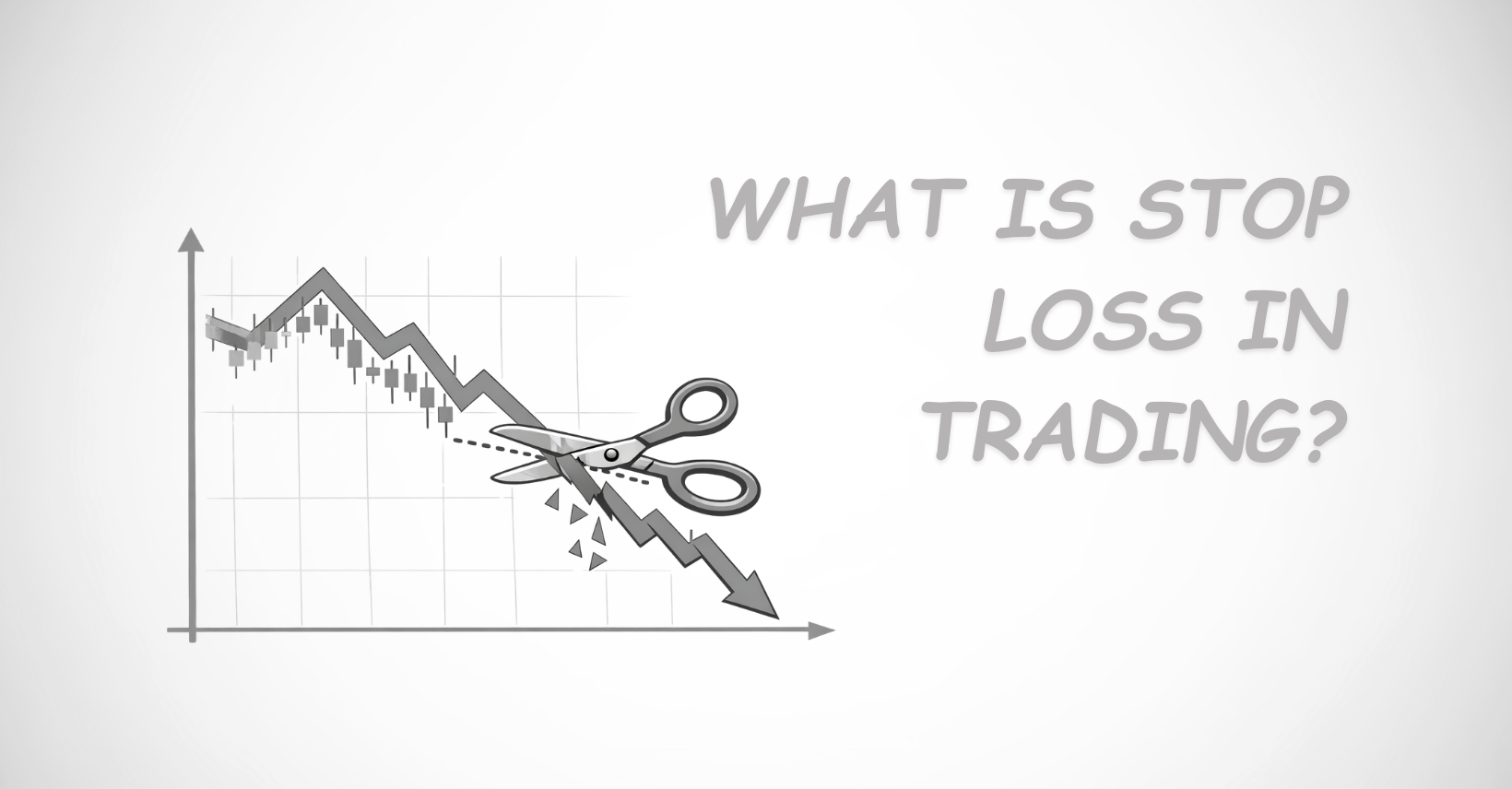
Stop loss in trading is a predefined risk control order that automatically closes an open position once price reaches a specified loss level.
It is a capital protection mechanism designed to cap downside exposure on any single trade.
A stop loss does not eliminate the possibility of loss; instead, it defines the maximum acceptable loss before the position is exited.
In leveraged financial markets including foreign exchange, contracts for difference, futures contracts, equities, and digital assets, price fluctuations can accelerate without warning.
Without a stop loss in place, minor adverse price movement can escalate into disproportionate account damage.
For this reason, stop loss is widely recognized as a structural element of disciplined trading methodology and long-term account preservation.
This document provides a structured definition of stop loss in trading, its operational mechanics, calculation methods, order classifications, execution characteristics, strategic applications, psychological implications, and its role within comprehensive risk management frameworks.
Formal Definition of Stop Loss in Trading
Stop loss in trading refers to an automated exit order placed at a predetermined price level that closes an existing position once market price reaches a defined loss threshold.
The primary function of a stop loss is to restrict downside risk by preventing additional loss beyond a pre-approved boundary.
Stop Loss Order Activity Conditions
A stop loss order typically remains active from the moment it is placed until one of the following conditions occurs:
The market reaches the stop level and the position is closed automatically
The trader manually exits the position prior to stop activation
The stop level is modified to a different price
The position closes at a take profit level before the stop is triggered
Stop loss is not discretionary once set.
It operates as a predefined risk parameter independent of emotional reaction or subjective judgment.
Conceptual Meaning of Stop Loss in Trading
Stop loss represents the price point at which a trading hypothesis is considered invalid.
It defines the threshold beyond which continued participation in the trade is no longer justified based on the original analysis.
Within performance metrics, stop loss serves as a constraint against uncontrolled drawdowns.
Extended exposure to losing positions without predefined exit criteria is a primary contributor to account depletion.
Stop loss mitigates this structural vulnerability by enforcing disciplined exit behavior.
The strategic objective is not avoidance of error but containment of financial impact when error occurs.
Operational Mechanics of Stop Loss
Stop loss functions as an automatic trigger.
When market price reaches the specified stop level, the platform initiates order execution to close the position.
Placement differs according to trade direction:
For long positions, stop loss is placed below entry price.
For short positions, stop loss is placed above entry price.
Stop Loss in Long Positions
In a long trade, the trader anticipates price appreciation.
The stop loss is positioned beneath the entry to limit loss if price declines.
Illustrative structure:
Entry price: 1.2000
Stop loss: 1.1950
Trigger condition: market trades at 1.1950
Stop Loss in Short Positions
In a short trade, the trader anticipates price depreciation.
The stop loss is positioned above entry to cap loss if price rises.
Illustrative structure:
Entry price: 1.2000
Stop loss: 1.2050
Trigger condition: market trades at 1.2050
Stop loss does not guarantee execution at the exact price level specified.
It guarantees exit initiation once the threshold is reached.
Functional Importance of Stop Loss
Stop loss serves multiple structural functions within a trading system:
Capital Preservation
Trading capital represents the operational base for future opportunity.
Loss of principal increases recovery difficulty due to compounding percentage requirements.
Stop loss limits single-trade impact.
Prevention of Account Termination
Unrestricted loss exposure can result in margin calls or forced liquidation.
Stop loss restricts this probability.
Emotional Neutralization
Market fluctuation can induce hesitation, panic, or denial.
Automated exit reduces subjective interference.
Risk Quantification
Position sizing calculations depend on defined risk distance.
Without a stop level, risk cannot be accurately measured.
Stop Loss and Take Profit Distinction
Stop loss and take profit represent opposing exit parameters.
Stop loss: closes position to limit loss.
Take profit: closes position to capture anticipated gain.
Stop loss defines acceptable failure range.
Take profit defines projected success range.
Professional trading structures incorporate both parameters for symmetrical risk-reward control.
Calculation Methodologies
Stop loss calculation integrates multiple variables:
Entry price
Stop level
Risk per trade (monetary or percentage)
Position size
Volatility metrics
Technical structure levels
There is no standardized universal distance.
Stop placement must reflect both market behavior and account tolerance.
Stop Loss Measured in Pips
Within foreign exchange markets, stop distance is often defined in pips.
Example:
Entry: 1.2500
Stop: 1.2450
Distance: 50 pips
Position size must adjust relative to pip value to maintain constant monetary risk.
Stop Loss as Percentage of Account
Some frameworks define risk as a percentage of account equity.
Example:
Account equity: 10,000
Risk parameter: 1 percent
Maximum loss: 100
Stop price is derived from technical analysis.
Position size is calibrated so that loss at stop equals 100.
Stop Loss in Fixed Monetary Terms
Risk may also be defined in fixed currency terms.
Example:
Risk tolerance: 50 per trade
Stop derived from chart structure
Lot size calibrated so stop equals 50
Order Classifications of Stop Loss
Fixed Stop Loss
Static level maintained until position closure.
Provides consistent predefined risk.
Trailing Stop Loss
Dynamic level that advances in the direction of favorable price movement.
Designed to protect unrealized gains.
Break-Even Stop
Adjustment of stop level to entry price once sufficient profit develops, eliminating initial risk exposure.
Time-Based Stop
Exit triggered by elapsed time rather than price level.
Common in short-term trading methodologies.
Volatility-Based Stop
Placement determined by average price range metrics such as average true range or statistical deviation.
Technical Stop
Placement derived from structural chart elements including support, resistance, swing highs, swing lows, trend boundaries, and liquidity zones.
Stop Loss Order Definition
A stop loss order is the executable instruction submitted to a brokerage platform that activates exit once the stop level is reached.
Execution mechanics vary depending on market structure and liquidity conditions.
Stop Loss Versus Stop Limit Order
Stop Loss Order
Converts to market order upon trigger.
Provides execution priority but not exact price certainty.
Stop Limit Order
Converts to limit order upon trigger.
Provides price constraint but no guarantee of execution.
Execution Considerations
When stop loss is triggered, execution occurs at the next available market price.
Variance between expected and actual price may occur due to:
Spread expansion
Slippage
Liquidity shortage
Volatility spikes
Price gaps
Slippage refers specifically to discrepancy between designated stop level and final execution price.
Placement Principles
Effective stop placement satisfies two criteria:
Defines unacceptable loss boundary
Allows sufficient price fluctuation within normal market behavior
Common structural placement methods include:
Below support or above resistance
Beyond swing extremes
Beyond structural break levels
Strategic Evaluation of Stop Loss
A functional stop strategy exhibits:
Analytical placement
Consistent risk per trade
Balanced distance relative to volatility
Alignment with profit objectives
Adjustment only upon structural confirmation
Stop Loss Within Risk Management
Stop loss alone does not constitute full risk management.
Position sizing must correspond with stop distance.
Excessive position size can negate protective value.
Professional risk exposure commonly ranges between 0.5 percent and 2 percent of account equity per trade, depending on strategic profile.
Leverage Considerations
Leverage amplifies both gains and losses.
Stop loss becomes increasingly critical under leveraged exposure due to magnified price sensitivity.
Market-Specific Applications
Foreign Exchange
Stops typically expressed in pips and adjusted for session volatility and macroeconomic events.
Equities
Overnight gaps can result in execution beyond stop level.
Portfolio diversification may supplement risk control.
Digital Assets
Continuous 24-hour trading increases reliance on automated protective orders.
Futures Contracts
High leverage exposure necessitates strict stop adherence to avoid rapid capital erosion.
Common Structural Errors
Excessively Tight Placement
Prone to frequent premature exit due to normal fluctuation.
Excessively Wide Placement
Increases capital erosion and reduces recovery efficiency.
Widening Stop During Loss
Transforms controlled risk into uncontrolled exposure.
Removing Stop Entirely
Eliminates defined risk boundary and increases probability of catastrophic loss.
Arbitrary Fixed Distance
Disregards structural and volatility considerations.
Psychological Implications
Stop loss enforces acceptance of uncertainty.
Resistance often arises from aversion to realized loss.
Structured implementation reframes stop loss as operational cost rather than personal failure.
Percentage Risk Guidelines
There is no universal optimal percentage.
Common reference ranges include:
0.5 percent for conservative profiles
1 percent for moderate profiles
2 percent for higher tolerance structures
Distance of stop and position size must be integrated variables.
Consistency and Performance
Trading performance is evaluated across sequences of trades rather than individual outcomes.
Stop loss supports statistical stability by maintaining predictable loss distribution.
Applied Numerical Illustration
Account balance: 5,000
Risk allocation: 1 percent
Maximum loss: 50
Entry: 1.3000
Stop: 1.2950
Distance: 50 pips
Position size adjusted so 50 pips equals 50
If triggered, loss equals predefined allocation, preserving remaining capital for subsequent opportunity.
Simplified Definition
Stop loss in trading is an automated exit mechanism that limits financial loss on a position by closing the trade at a predetermined adverse price level.
It establishes the boundary at which a trading assumption is invalidated and capital protection takes precedence over continued exposure.
Stop loss exists because market outcomes are probabilistic rather than certain.
By defining acceptable loss in advance, traders maintain capital continuity, psychological stability, and operational consistency across extended trading horizons.