

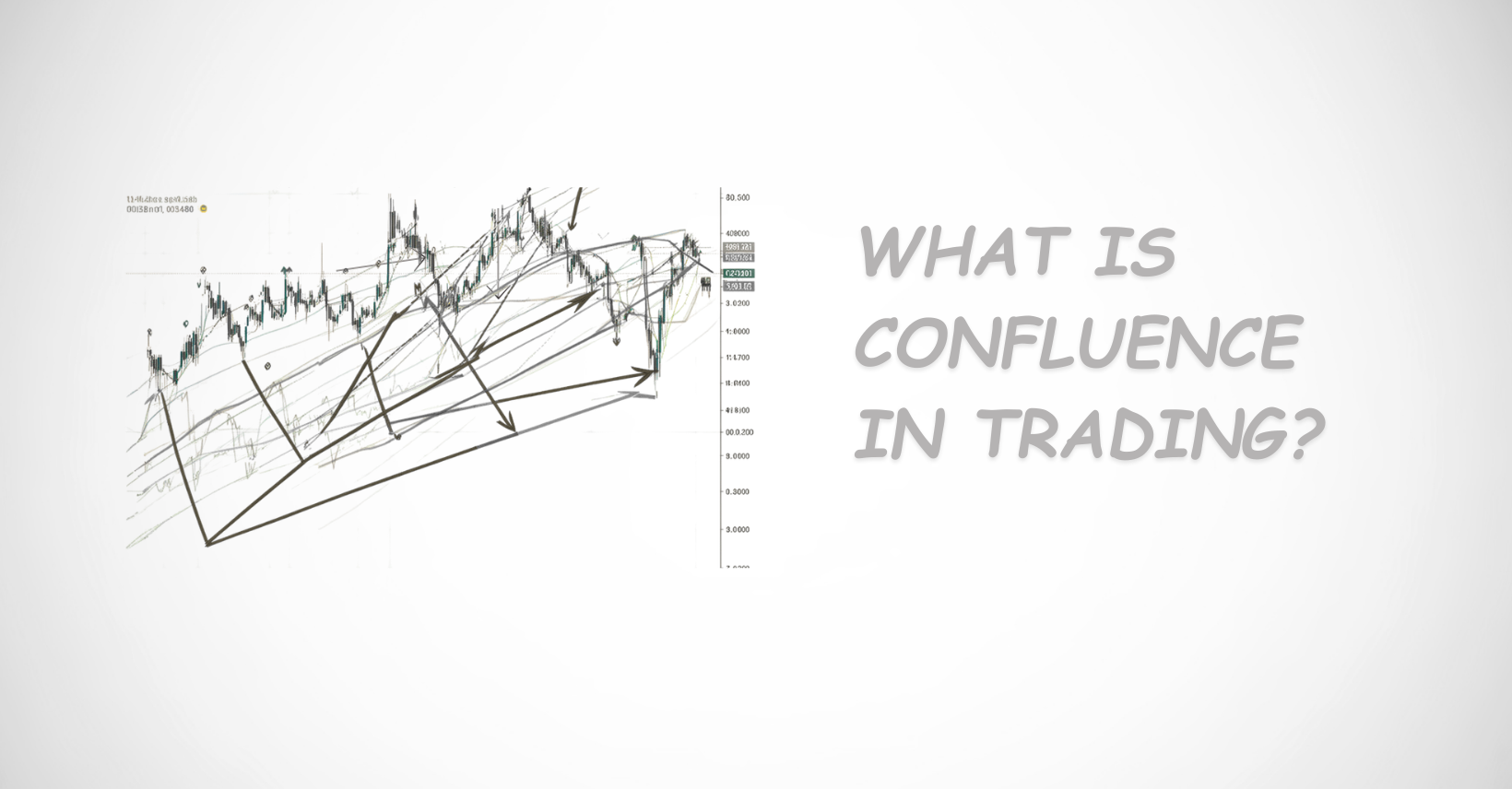
Confluence in trading is a term used to describe the alignment of multiple independent technical or market-based factors that support the same trading direction, price zone, or expected outcome. It refers to the practice of combining several analytical tools so they point toward a shared conclusion rather than relying on a single signal in isolation.
In practical trading terms, confluence means gathering multiple forms of confirmation before entering a position. Instead of basing a decision on one indicator or one chart pattern, a trader waits for several elements to line up in the same area. These elements may include support and resistance levels, prevailing trend direction, moving averages, price action formations, Fibonacci retracement levels, volume behavior, and overall market structure.
Confluence is applied across forex, stocks, cryptocurrencies, commodities, and futures because it strengthens decision-making and helps reduce exposure to weak or random setups. By demanding alignment between tools, traders filter out low-probability trades and concentrate on opportunities supported by broader technical agreement.
Confluence does not promise profit or eliminate risk. It increases the probability that a trade is grounded in logical market behavior and supported by multiple layers of analysis. For this reason, confluence is regarded as a core principle in professional technical analysis and systematic trading strategy design.
Definition of Confluence in Trading
Confluence in trading is defined as the presence of two or more independent technical, structural, or contextual signals that validate the same trade idea, entry level, or directional bias. It functions as layered confirmation that strengthens the statistical probability of a trade outcome.
A confluence setup occurs when different categories of analysis overlap at or near the same price zone. For example, a major support level may coincide with a Fibonacci retracement level while a Bullish candlestick pattern forms in that area. The overlap of these factors creates a confluence zone.
Confluence is often described as stacking reasons for a trade. Each additional independent factor adds structural support to the idea, increasing its analytical weight without guaranteeing certainty.
Meaning of Confluence in Trading Terminology
In trading terminology, confluence simply means agreement between factors.
If one indicator suggests a buy while other tools remain neutral, the setup carries limited confirmation. If multiple independent tools suggest the same buy scenario, the setup gains analytical strength.
Confluence does not represent perfection or certainty. It represents reduction of uncertainty through alignment. The objective is not to find flawless trades but to improve the quality of decision-making by requiring confirmation from multiple perspectives.
Professional traders rarely rely on a single indicator in isolation. Instead, they seek alignment between market structure, trend direction, key levels, and real-time price behavior before committing capital.
Importance of Confluence in Trading
Confluence holds importance because financial markets are inherently uncertain. No technical tool maintains accuracy in all conditions. A standalone indicator may generate false signals, and even strong chart formations can fail when they contradict the broader trend.
By requiring confluence, traders reduce impulsive entries and introduce structure into their execution process.
Improvement of Trade Probability
When independent signals align at a specific level, the likelihood of market reaction increases. Confluence suggests that multiple groups of market participants may recognize the same zone.
Filtering of Low-Quality Setups
Traders without structured criteria often act on isolated signals. Confluence forces selectivity, reducing exposure to random or emotionally driven trades.
Foundation for Structured Trading Plans
Confluence supports repeatable rules. It transforms subjective observation into definable criteria that can be tested and refined.
Support for Risk Management
Confluence zones frequently coincide with clear structural levels, providing logical areas for Stop Loss placement, entry execution, and profit targeting.
Mechanism of Confluence in Trading
Confluence operates by identifying price areas where distinct analytical tools arrive at the same directional implication. A trader evaluates the market through multiple lenses and then looks for overlap.
Each technical tool reflects a different aspect of market behavior. Support and resistance reflect historical reaction zones. Trend analysis reflects directional bias. Fibonacci levels highlight retracement proportions. Moving averages represent average price positioning. Candlestick patterns display immediate buying or selling pressure.
When these tools converge at the same price region, the combined interpretation forms confluence.
Confluence is not a standalone indicator. It is a decision-making framework based on alignment across analytical categories.
Types of Confluence in Trading
Confluence may take different forms depending on methodology. Some traders rely primarily on price action alignment, while others incorporate indicators, structure, or multi-timeframe analysis.
Price Action Confluence
Price action confluence refers to setups confirmed by direct observation of market movement. It is considered reliable because it is derived from raw price behavior rather than lagging calculations.
Examples include Bullish engulfing formations at support, pin bar rejections at resistance, breakout structures followed by retests, or strong impulsive candles emerging from consolidation. The emphasis is on visible reaction at key zones.
Support and Resistance Confluence
Support and resistance confluence occurs when trade entries align with historically respected price zones. A long position near major support in an uptrend, a short position near resistance in a downtrend, or a breakout retest that flips resistance into support are all examples.
These zones represent prior participation by significant buyers or sellers. When additional tools confirm these levels, the confluence strengthens.
Trend Confluence
Trend confluence refers to alignment between trade direction and dominant market structure. Uptrends are characterized by higher highs and higher lows. Downtrends display lower highs and lower lows. Trend line and moving averages may serve as directional filters.
Aligning entries with prevailing momentum reduces the probability of countertrend failure.
Moving Average Confluence
Moving average confluence arises when price interacts with dynamic averages that overlap with structural zones. Pullbacks into the 20, 50, 100, or 200 exponential moving averages within strong trends often serve as areas of interest. Clustering of multiple averages further strengthens the zone.
Fibonacci Confluence
Fibonacci confluence describes price reaction at retracement or extension levels that align with support, resistance, or trendlines. Retracement levels such as 50 percent or 61.8 percent gain significance when they coincide with existing structure.
Market Structure Confluence
Market structure confluence occurs when entries align with shifts in highs, lows, breakouts, or reversals. Break of structure followed by retest, change of character patterns, Liquidity sweeps preceding reversals, and higher timeframe support aligning with lower timeframe breakouts are structural examples.
Indicator Confluence
Indicator confluence involves agreement between technical oscillators or momentum tools and structural zones. Relative Strength Index oversold readings at support, MACD crossovers with Bullish candles, stochastic reversals at demand areas, or volume spikes during breakouts illustrate this form.
Volume Confluence
Volume confluence appears when trading volume validates price movement. Breakouts accompanied by strong participation, reversals with noticeable volume expansion, or declining volume during consolidation before expansion are examples. Volume represents engagement and conviction.
Multi-Timeframe Confluence
Multi-timeframe confluence refers to alignment between higher and lower timeframes. Higher charts define directional bias and major zones, while lower charts refine entry timing. Agreement across timeframes increases structural consistency.
High-Confluence Trade Structure
A high-confluence trade is characterized by layered confirmation at a single price area. For instance, an uptrend may pull back into support that overlaps with a 61.8 percent Fibonacci retracement and a 50-period moving average while a Bullish engulfing candle forms and momentum recovers from oversold conditions.
The strength lies in alignment. Even if one element fails, remaining factors still support the structural thesis.
Confluence Identification Process
Identification of confluence follows a structured sequence.
First, determine overall market condition: trending upward, trending downward, or Range.
Second, mark key support and resistance zones based on historical reaction.
Third, define a potential setup zone such as a pullback, retest, or reversal area.
Fourth, evaluate additional confirmation tools including Fibonacci alignment, Trend line overlap, moving average interaction, candlestick signals, or structural shifts.
Fifth, observe real-time price response before executing.
Confluence and Confirmation Distinction
Confluence refers to the alignment of factors at a level. Confirmation refers to evidence that price is beginning to move as anticipated.
For example, support combined with Fibonacci alignment and moving average overlap forms confluence. A Bullish candle closing above structure provides confirmation.
Confluence establishes the context. Confirmation triggers execution.
Optimal Number of Confluence Factors
There is no fixed quantity, though many experienced traders rely on two to five independent factors. Too few may weaken probability. Excessive requirements may limit participation and create indecision.
Effective confluence combines diverse categories such as structure, trend, and momentum rather than duplicating similar indicators.
Confluence Versus Indicator Overload
Confluence involves alignment of different analytical types. Indicator overload occurs when multiple tools measuring the same concept are stacked together without adding independent insight.
Using several momentum oscillators simultaneously may not strengthen analysis. Combining trend direction, structural level, price reaction, and volume provides broader confirmation.
Benefits of Confluence
Confluence enhances trade selection by narrowing focus to stronger setups. It improves execution confidence by reinforcing rationale. It supports logical stop placement near structural levels. It improves potential reward relative to risk when clean reactions occur. It encourages disciplined and consistent performance through structured criteria.
Limitations of Confluence
Confluence does not eliminate losing trades. Unexpected volatility, economic releases, or institutional activity can invalidate even strong setups. Interpretation of zones may vary between traders, introducing subjectivity. Excessive strictness may reduce trade frequency.
The objective of confluence is probability enhancement rather than certainty.
Role of Confluence in Risk Management
Confluence directly influences risk management quality. Entries near key zones often allow tighter stop placement. Structural clarity assists in defining realistic profit targets. Improved setup quality supports stable risk per trade while maintaining favorable reward potential.
Confluence increases performance potential without requiring larger position sizes.
Confluence in Strategy Development
Many systematic trading approaches are built on confluence principles. Such strategies typically include a trend filter, clearly defined support and resistance zones, a confirmation trigger based on price or structure, predefined Risk Management parameters, and trade management guidelines.
Rather than acting on every signal, confluence-based systems prioritize zones where probability is statistically enhanced. For this reason, confluence is widely regarded as a foundational concept in professional trading system design.