
Let’s be honest.
If you’ve ever closed a winning trade too early… revenge-traded after a loss… or doubled your position just to “make it back,” you already understand something most beginners ignore:
Trading is more psychological than technical.
Indicators matter. Strategy matters. Risk-reward ratios matter. But none of it works if your emotions are driving the decisions.
Quick Answer: How Do You Control Emotions in Trading?
You control emotions in trading by using a written trading plan, fixed risk per trade, predefined stop-loss levels, and strict journaling. Emotional discipline comes from structure, not willpower. When risk is controlled and rules are clear, emotional reactions lose power.
Why Emotional Control Is Critical in Trading
Financial markets are built to trigger emotional reactions.
Prices move quickly. News breaks without warning. A profitable trade can turn red in seconds. And losses? They don’t send a polite notice first.
Without emotional control, traders fall into predictable traps:
Overtrading after a losing streak
Closing winning trades too early out of fear
Holding losing trades too long hoping they “come back”
Increasing lot size impulsively
Ignoring stop-loss rules
And here’s the painful part: you can have a profitable strategy and still lose money because of emotional mistakes.
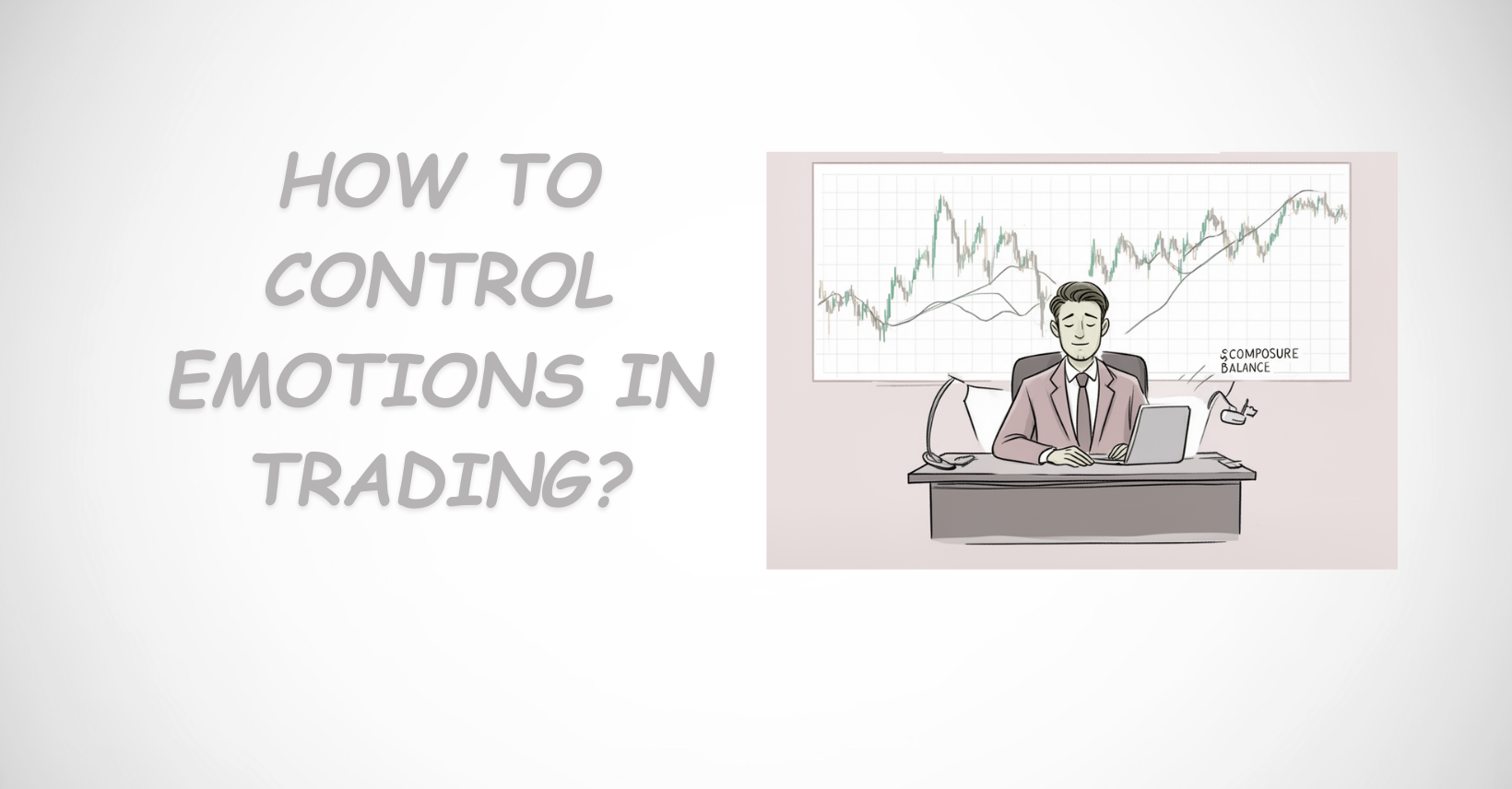
Controlling emotions in trading doesn’t mean becoming emotionless. That’s impossible. It means managing your reactions so every decision aligns with your trading plan — not your mood.
The Most Common Emotions That Affect Traders
Before you can fix emotional trading, you need to identify what’s actually happening in your mind.
1. Fear
Fear shows up in two major ways:
Fear of losing money
Fear of missing out (FOMO)
Fear causes hesitation. It causes early exits. It causes traders to chase price after it has already moved.
You hesitate when you should enter. You exit when you should hold. You enter late when you should stay out.
That’s fear at work.
2. Greed
Greed feels good — at first.
It pushes traders to:
Remove take-profit targets
Increase lot size beyond the plan
Ignore risk rules
Hold trades far past logical levels
Greed is exciting in the short term. But it often ends in large drawdowns that erase weeks of progress.
3. Revenge Trading
After a loss, some traders feel the need to “win it back” immediately.
So they enter without confirmation. They increase position size. They abandon discipline.
Revenge trading turns small losses into account damage.
4. Overconfidence
Winning streaks can be just as dangerous as losing streaks.
Overconfidence leads to:
Skipping analysis
Increasing risk unnecessarily
Ignoring entry rules
Breaking consistency
Understanding these emotional triggers is the first real step toward mastering them.
10 Proven Strategies to Control Emotions in Trading
Now let’s talk solutions. Not theory. Not motivation. Structure.
1. Trade With a Written Trading Plan
If your rules live only in your head, they’ll change with your emotions.
A real trading plan should clearly define:
Entry criteria
Stop-loss rules
Take profit structure
Risk percentage per trade
Maximum daily loss
Trading sessions
Professional traders treat their plan like a business contract. If it’s not written in the plan, they don’t do it.
Clarity reduces emotional decision-making. Guesswork invites it.
2. Use Fixed Risk Per Trade
Proper risk management is one of the strongest emotional stabilizers in trading.
Most disciplined traders risk:
0.5% to 1% per trade (conservative approach)
Maximum 2% per trade (higher-risk approach)
When your risk is controlled, losses don’t feel catastrophic. And when losses don’t feel catastrophic, emotional reactions shrink dramatically.
Small risk. Stable mindset.
3. Accept That Losses Are Normal
No strategy wins 100% of the time.
Losses are not a sign you’re failing. They’re part of the business model.
The goal isn’t avoiding losses. It’s:
Keeping them small
Staying consistent
Following the plan
Once you accept that losses are business expenses, you stop reacting emotionally to them.
That shift alone changes everything.
4. Set Predefined Stop Loss and Take Profit Levels
Entering a trade without an exit plan creates anxiety.
Before placing a trade, define:
Where you’re wrong (stop loss)
Where you’re taking profit
When both are set in advance, you remove mid-trade emotional interference.
You already decided. Now you execute.
5. Limit Screen Time
Watching every candle move can intensify emotional reactions.
Constant chart-checking:
Increases fear
Encourages micromanagement
Causes premature exits
Once your trade meets your rules and is placed properly, step away.
Check at predefined intervals — not every minute.
6. Keep a Detailed Trading Journal
A trading journal builds emotional awareness.
Record:
Why you entered
Risk percentage
Emotional state at entry
Trade outcome
Lessons learned
After 30 to 50 trades, patterns will appear.
You’ll see whether fear causes early exits. Whether greed appears after wins. Whether losses trigger impulsive behavior.
Awareness builds control.
7. Avoid Overtrading
More trades do not equal more profit.
Set limits such as:
Maximum number of trades per day
Maximum daily loss
Stop trading after reaching profit target
Structure prevents emotional spirals.
Sometimes the best trade is no trade.
8. Focus on Process Over Profit
If you obsess over money, emotions spike.
Instead, measure success by:
Did I follow my rules?
Did I respect risk?
Did I execute cleanly?
If your process is strong, results follow over time.
Short-term profit obsession creates instability.
9. Trade Only Valid Setups
Random trades create emotional stress.
Stick strictly to:
Your preferred timeframes
Your confirmation signals
Your defined market conditions
If the setup isn’t there, don’t force it.
Discipline means selective participation.
10. Build Mental Discipline Outside Trading
Your mental state outside trading affects performance inside trading.
Consider improving:
Sleep consistency
Physical exercise
Stress management
Breathing techniques
Trading psychology reflects overall mental clarity.
A stressed mind trades poorly. A stable mind trades consistently.
The Psychology Behind Emotional Trading
Here’s what most traders don’t realize.
When you win a trade, your brain releases dopamine — the reward chemical.
When you lose, your brain activates the fight-or-flight response and releases cortisol.
Fast price movement can trigger adrenaline similar to physical danger.
Your body reacts as if survival is at stake.
The goal is to move from reactive mode to structured decision-making mode.
Professional traders rely on:
Predefined systems
Data-driven decisions
Mechanical execution
The more rule-based your system, the less emotional interference you experience.
How Long Does It Take to Master Emotional Control in Trading?
There’s no fixed timeline.
Emotional discipline improves through:
Experience
Repetition
Journaling
Consistency
Structured rules
Many traders see significant improvement after 6 to 12 months of disciplined practice, strict risk management, and reduced impulsive behavior.
Emotional control is a skill.
And like any skill, it develops with repetition.
Signs You’re Improving Emotionally as a Trader
You’ll notice progress when:
Losses feel manageable, not devastating
You follow your plan after a losing streak
Revenge trading disappears
Wins don’t create euphoria
Execution matters more than outcome
Emotional neutrality is the target — not emotional excitement.
Calm trading is consistent trading.
Common Mistakes When Trying to Control Emotions
Avoid these common traps:
Trying to eliminate emotions completely
Making your strategy more complicated instead of fixing discipline
Changing strategies after a few losses
Increasing risk to speed up growth
Emotional control is built through structure — not motivation.
You don’t need more inspiration. You need clearer rules.
Final Thoughts: Emotional Discipline Is Your True Edge
Here’s the reality most traders eventually learn:
Your strategy gives you entries.
Your emotional control determines your survival.
Many traders spend years searching for better indicators. Very few spend serious time strengthening their mindset.
Consistency. Discipline. Structured risk management.
That’s what separates struggling traders from profitable ones.
Focus on your process. Respect risk. Execute your plan exactly as written.
That’s how you control emotions in trading.
And that’s how you build lasting performance in the financial markets.